
Make this Thanksgiving a time to embrace compassion
As Thanksgiving approaches, Breaking The Chains Foundation is sharing five thoughtful tips to support individual well-being while encouraging family and friends to create a more compassionate, understanding, and supportive environment.
The holidays can bring a range of emotions and experiences for everyone. A little empathy, awareness, and kindness can go a long way in helping others feel seen, heard, and supported.
These five tips are shared by Breaking The Chains Foundation Board Member, Dr. Niyati Kadakia.
Let’s make this Thanksgiving a time to embrace compassion, connection, and understanding. 💛
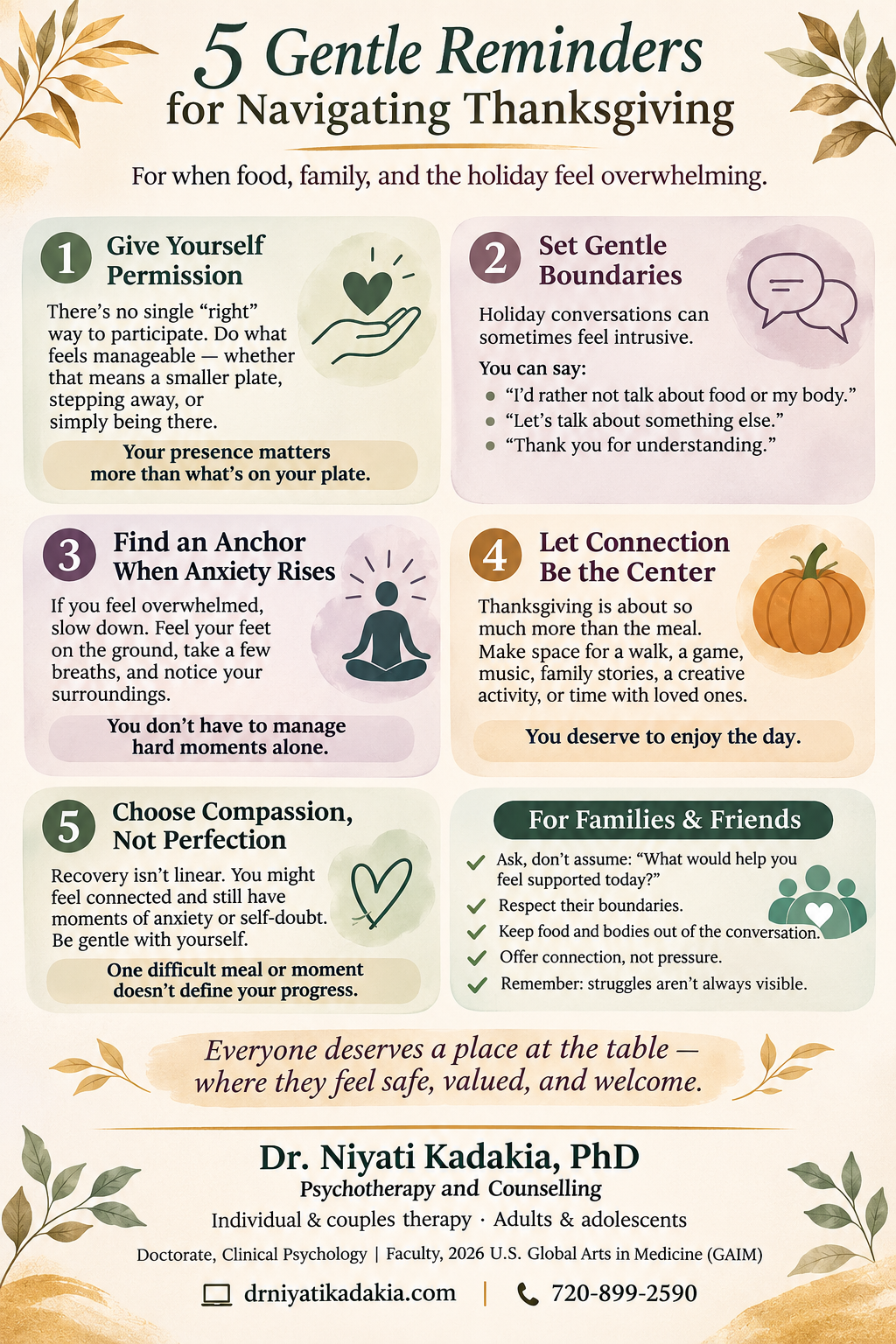
1. Give Yourself Permission to Experience Thanksgiving in Your Own Way
There is no single correct way to participate in a holiday celebration.
For someone experiencing food anxiety, the anticipation of a large meal, unfamiliar dishes, or questions from relatives can feel overwhelming.
Before the gathering, consider what would help you feel emotionally supported. Perhaps that means sitting beside someone you trust, stepping away when needed, or making a plan with your therapist or treatment team if you are in recovery.
You do not have to explain your eating habits, justify your choices, or participate in every tradition to belong at the table.
Remember: Your presence matters more than what is on your plate.
2. Prepare for Difficult Conversations and Practice Gentle Boundaries
Thanksgiving gatherings can sometimes include seemingly harmless comments:
- “Are you really going to eat all that?”
- “You’ve lost weight! You look amazing!”
- “I’m going to have to work this meal off tomorrow.”
- “Come on, just have another serving!”
Even well-intentioned remarks can heighten anxiety, shame, or self-consciousness.
It can help to prepare a few simple responses:
- “I’d rather not talk about food or bodies today.”
- “I’m enjoying being here. Let’s talk about something else.”
- “Thank you for understanding that I’m making the choices that feel right for me.”
For family members and friends, one of the most meaningful forms of support is to avoid commenting on someone’s body, appetite, portions, or food choices.
Remember: Boundaries are not a rejection of connection. They can make genuine connection possible.
3. Find an Anchor When Anxiety Begins to Rise
Anxiety often pulls our attention toward imagined judgments, uncomfortable sensations, or worries about what might happen next.
A simple grounding practice can help bring us back to the present.
If you begin feeling overwhelmed, try placing both feet on the floor, noticing the support of your chair, and gently observing three things around you. Take a comfortable breath, without forcing yourself to relax.
You might quietly remind yourself:
I am here. I can take this one moment at a time. I am allowed to ask for support.
If possible, identify a trusted person beforehand who can sit beside you, change the subject, or accompany you outside for a few minutes.
You do not have to manage every difficult moment alone.
Remember: Feeling anxious does not mean you are failing. You can experience discomfort and still deserve kindness, support, and belonging.
4. Let Connection, Not Food, Be the Center of the Celebration
Although Thanksgiving traditions often revolve around a meal, the meaning of the holiday can extend far beyond the dinner table.
Consider creating opportunities for connection that do not revolve around eating.
You might take a gentle walk with someone you love, play a board game, listen to music, share family stories, participate in a creative activity, or spend time with children or pets.
For some, volunteering or reaching out to someone who might be alone can also bring a sense of meaning to the day.
Importantly, these activities should be opportunities for pleasure and connection, not ways to compensate for eating.
Remember: You deserve to experience joy, laughter, affection, and meaningful connection, regardless of how challenging the meal may feel.
5. Practice Compassion Instead of Trying to Have a Perfect Holiday
Recovery and healing rarely follow a straight line.
You may have moments when you feel comfortable and connected, followed by moments of anxiety, guilt, or self-criticism. Both experiences can exist within the same day.
Try to resist evaluating the holiday according to what you ate, how you looked, or whether you managed every situation perfectly.
If you are following a recovery meal plan, continue working with the guidance of your treatment team rather than changing your eating patterns to compensate for the holiday.
And if the day feels difficult, remember that one meal, one uncomfortable conversation, or one challenging afternoon does not define your progress.
Perhaps the most compassionate question you can ask yourself at the end of the day is not, “Did I do everything right?”
But rather:
“Was there a moment when I treated myself with kindness? Was there a moment when I allowed myself to connect with someone?”
Remember: You do not have to have a perfect Thanksgiving to have a meaningful one.
A Final Thought for Families and Friends
Sometimes, the most meaningful support we can offer someone struggling with food anxiety isn’t advice, encouragement to eat, or reassurance about their appearance. It’s creating an environment where they feel respected, included, and free from judgment.
A few small things can make a tremendous difference:
- Ask, don’t assume. A simple “What would help you feel more comfortable today?” can mean so much.
- Respect their boundaries. They don’t need to explain or justify their food choices, feelings, or need for space. If they’re following a treatment plan, support them in doing so without monitoring or pressuring them.
- Leave bodies and food choices out of the conversation. Even well-intentioned compliments about weight, appearance, or eating habits can be difficult.
- Offer connection, not pressure. Invite them into conversations, games, laughter, and traditions that go beyond the meal.
- Remember that struggles aren’t always visible. Someone may appear perfectly comfortable while quietly managing considerable anxiety. A little kindness and sensitivity go a long way.
Everyone deserves a place at the table where they feel safe, valued, and welcome. 🥰❤️🤗